The best AI browser agents in 2026 are finally useful enough to matter. Instead of just answering questions about the web, they can open pages, click through flows, fill forms, gather information across tabs, and sometimes complete entire web tasks with very little hand-holding.
That shift is why this category is heating up right now. March 2026 coverage keeps pointing at the same broader trend: buyers care less about raw chatbot cleverness and more about whether an AI system can actually operate software. That is showing up in products like OpenAI's Operator, Perplexity's Computer, Skyvern, and Browser Use.
If you mostly want a general-purpose assistant instead of a web operator, start with our ChatGPT vs Claude comparison. If your use case is mostly internal work automation across docs, spreadsheets, and repeatable team processes, our AI tools for operations teams guide is also relevant because browser agents are rarely the whole stack on their own.
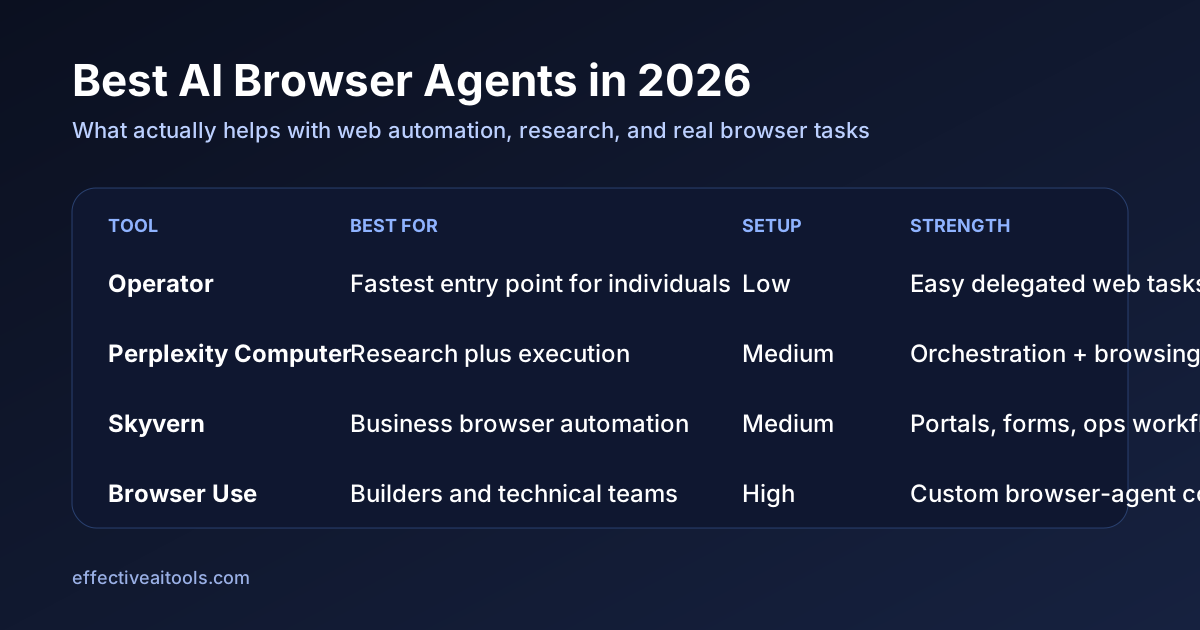
Quick answer: which AI browser agent should you use?
- Use Operator if you want the simplest consumer-friendly way to hand off web tasks and see what browser agents feel like in practice.
- Use Perplexity Computer if you want stronger research plus agent-style execution and you like the idea of orchestration being the product.
- Use Skyvern if you need browser automation for real business workflows, especially forms, portals, and repetitive operations work.
- Use Browser Use if you are technical and want to build, script, or customize your own browser-agent workflows.
For most non-technical individuals, Operator is the easiest entry point. For businesses automating web-heavy workflows, Skyvern is the strongest practical choice. For technical teams that want flexibility rather than a boxed product, Browser Use is the most interesting option.
Why this category is hot right now
The freshness signal is clear. Recent reporting and launch coverage keep converging on the same pattern: models are becoming less important than orchestration, tool use, and workflow completion. In plain English, the market is moving from “ask AI a question” to “give AI a browser and a job.”
That matters because the browser is still where a lot of real work happens: vendor research, lead capture, internal portals, reporting dashboards, claims workflows, scheduling, ecommerce back offices, and messy SaaS admin tasks. The same pressure that pushed coding tools toward agent workflows is now pushing the web-automation category forward too. If you saw that trend in our AI coding assistants comparison, this is the same movement in a different surface.
Operator — Best for most people trying browser agents for the first time
Website: openai.com
Operator's main advantage is accessibility. It is the clearest expression of what many normal users want from a browser agent: "go do this web task for me" without needing to wire together APIs, browser sessions, and prompts by hand.
Operator is best when the task looks like a human browser session: navigating websites, filling fields, stepping through forms, or handling simple online errands. It is also a good fit if you want a consumer-grade product rather than a developer toolkit.
Operator is best for:
- Consumers and solo operators exploring browser agents for the first time
- Simple repetitive web tasks
- People who want a product, not a framework
- Prompt-to-browser workflows where convenience matters more than full control
Where Operator falls short: it is still an early category product, and browser agents remain fragile around dynamic sites, authentication weirdness, and tasks where small mistakes are expensive. It is better for supervised delegation than blind trust.
Bottom line: Operator is the best default starting point if you want to feel the value of browser agents quickly without becoming an automation engineer.
Perplexity Computer — Best for research-plus-execution workflows
Website: perplexity.ai
Perplexity Computer stands out because it treats orchestration as the product. Instead of being only a chatbot with browsing, it is positioned around multi-step task execution with access to tools, browser context, and isolated compute environments.
That makes it especially interesting for workflows that mix research with action: gather information, compare options, open sources, move through websites, and then keep going until the task is actually done. That is a stronger story than “AI search, but slightly better.”
Perplexity Computer is best for:
- Research-heavy workflows that end in action, not just reading
- Users who already like Perplexity's research experience
- People who want model orchestration without building it themselves
- Early adopters who care about agent workflows more than polished predictability
Where Perplexity Computer falls short: it is still part of a fast-moving product category where reliability and guardrails matter more than demos. If you need stable, audited business automation today, dedicated workflow tooling may still be safer.
Bottom line: Perplexity Computer is one of the most interesting products in this category because it bridges AI research and computer-use execution better than most chatbot-first tools.
Skyvern — Best for business browser automation
Website: skyvern.com
Skyvern is the most obviously business-shaped product here. Its positioning is not about novelty. It is about using AI-powered browser automation on websites that do not offer clean APIs, which is exactly the kind of ugly operational reality many teams deal with every day.
That matters. A lot of high-value browser work is buried in vendor portals, government forms, internal back-office workflows, and brittle interfaces that were never designed for elegant integrations. Skyvern is attractive because it is built around that pain instead of pretending every workflow starts with a nice API.
Skyvern is best for:
- Operations teams automating repetitive browser work
- Form-heavy workflows and legacy portals
- Businesses that need AI automation on sites without good APIs
- Teams that care about practical execution more than consumer polish
Where Skyvern falls short: it is not the lightest-weight option for casual users, and the category still requires careful review when sensitive workflows, credentials, or regulated data are involved.
Bottom line: Skyvern is the best AI browser agent in 2026 for businesses that want to automate serious web workflows rather than just play with consumer demos.
Browser Use — Best for builders and technical teams
Website: browser-use.com
Browser Use is the technical pick. It is appealing because it gives developers and agent builders a way to create custom browser workflows rather than forcing them into one product opinion about how automation should work.
If your question is “which browser agent should I buy,” Browser Use is not always the easiest answer. But if your question is “which browser-agent stack should I build on,” it becomes a much stronger candidate. That distinction matters.
Browser Use is best for:
- Developers building custom web agents
- Technical teams that want control over prompts, flows, and integrations
- Agent experimentation and internal tooling
- Workflows where flexibility matters more than turnkey convenience
Where Browser Use falls short: it demands more technical effort, and you inherit more responsibility for reliability, observability, and safeguards than you would with a more packaged product.
Bottom line: Browser Use is the best choice here if you are technical enough to benefit from flexibility and do not want a browser agent hidden behind a consumer wrapper.
How to pick the right AI browser agent
- You want the easiest starting point: Operator
- You want research plus action in one flow: Perplexity Computer
- You want business automation on ugly real websites: Skyvern
- You want to build your own browser-agent workflows: Browser Use
If you are buying for a team, do not treat “can demo a browser click path” as the success metric. What matters is whether the tool can reliably handle your specific workflow with enough supervision, logs, and failure recovery. That is the same mindset we recommend in our Copilot vs ChatGPT for work comparison: buy for the workflow, not the headline demo.
What not to do with AI browser agents
- Do not give a browser agent your highest-risk credentials unless you trust the platform and truly need the access.
- Do not assume a successful demo means production reliability.
- Do not use browser automation when a stable API already solves the problem more cleanly.
- Do not let the agent take irreversible actions without review on financial, legal, or customer-facing steps.
If that sounds cautious, good. It should. Browser agents are useful precisely because they can act, which also means they can act badly. Our AI safety guide is still relevant here because the trust question gets more important, not less, once the model can click buttons for you.
Verdict
Skyvern is the best AI browser agent in 2026 for practical business automation. It is the strongest fit for teams trying to automate real browser work that does not have a neat API path.
Operator is the best entry point for most individuals. Perplexity Computer is the most interesting research-plus-execution product. Browser Use is the right pick for builders who want to create their own browser-agent stack.
The mistake most buyers will make is treating this as a one-winner category. It is not. The right pick depends on whether you are a normal user, a business operator, or a technical team. That difference matters more than the model branding.