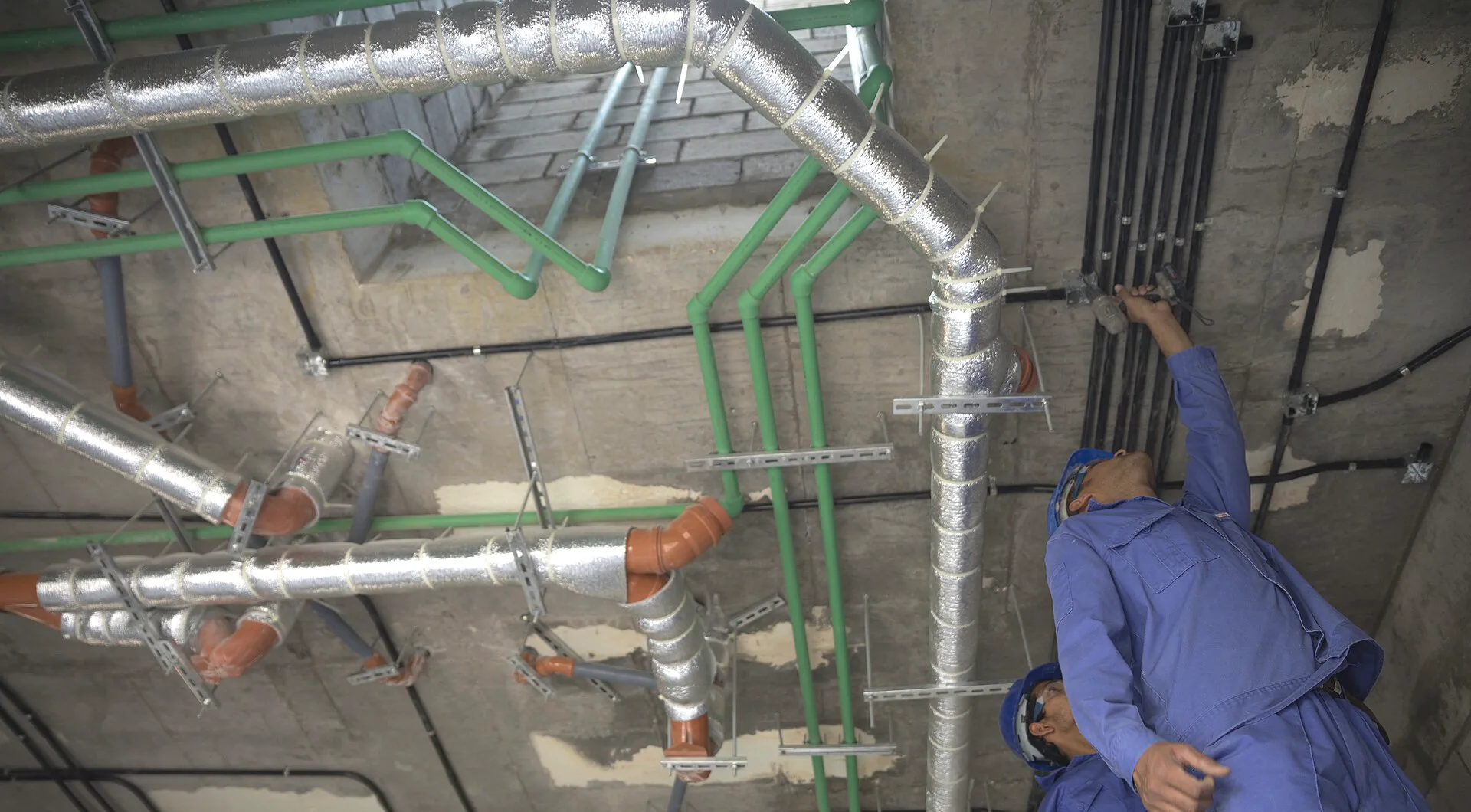
Photo by Abubaker Elshikh, CC BY-SA 4.0, via Wikimedia Commons
Disclosure: this article may contain affiliate links.
Contractors and site managers searching for the best AI tools construction trades 2026 must focus on platforms that integrate seamlessly with existing workflows to reduce rework, enhance safety compliance, and automate data-heavy tasks without requiring specialized programming skills. This guide reviews proven artificial intelligence applications that deliver measurable efficiency gains for residential, commercial, and infrastructure projects, helping teams move from reactive problem-solving to proactive project control. By leveraging computer vision, predictive analytics, and natural language processing, modern construction AI turns raw job site data into actionable insights, allowing professionals to concentrate on execution rather than administrative overhead. For a deeper understanding of how to evaluate software options, refer to our AI tool comparison guide to align features with your specific trade requirements.
How AI Enhances Site Safety and Progress Monitoring
Safety compliance and progress tracking represent two of the highest-risk areas in construction, where manual checks often miss deviations until they become costly issues. AI-powered monitoring systems provide continuous oversight, analyzing video feeds, images, and laser scans to detect hazards and compare as-built conditions against design models in real time.
Vizor deploys AI-enabled cameras to monitor job sites around the clock, automatically detecting whether workers are wearing required personal protective equipment such as hard hats, vests, and fall protection. The system generates instant alerts for compliance violations and produces automated reports that document safety standards throughout the project lifecycle, reducing the burden on safety officers.
OpenSpace uses artificial intelligence to stitch smartphone photos or drone footage into a searchable 3D walkthrough of the construction site. The AI aligns images with the BIM model, allowing stakeholders to tag issues, verify progress, and review historical states without visiting the field. This capability is particularly valuable for remote project managers and subcontractors who need accurate spatial context for coordination meetings.
Buildots leverages computer vision to compare laser scan data against BIM models, flagging geometric deviations before drywall or finishes cover up errors. The platform highlights discrepancies such as misaligned MEP routing or structural offsets, enabling crews to correct mistakes during the rough-in phase when changes are least expensive. Teams evaluating the best AI tools construction trades 2026 should prioritize safety and monitoring solutions that offer low-latency alerts and easy export to project management systems.
Best Tools for Automated Estimation and Quantity Takeoff
Accurate estimation prevents budget overruns and improves bid win rates, yet manual takeoffs remain prone to human error and inconsistency. AI-driven estimation tools analyze blueprints and specifications to auto-extract quantities, suggest assembly pricing, and identify missing items, allowing estimators to validate results rather than starting from scratch.
Stack applies machine learning to construction drawings, automatically recognizing elements like walls, doors, windows, and rebar to populate quantity takeoffs with high speed. The tool learns from user corrections over time, improving accuracy for future bids and enabling estimators to focus on pricing strategy and risk assessment. Stack is widely adopted by general contractors and specialty trades seeking to accelerate their bidding cycle.
Planswift remains an industry standard for digital takeoffs, now incorporating AI assistance to streamline measurement workflows and improve consistency across assembly-based estimating. The software helps estimators reuse assemblies, check for missing components, and generate detailed reports that link quantities directly to supplier pricing. Its integration with major accounting and project management platforms ensures that estimate data flows smoothly into the construction phase.
Bluebeam Revu enhances document review with AI-powered search and markup capabilities, allowing estimators to quickly locate specifications, compare revision changes, and extract data from PDF drawings. While primarily a document management tool, its AI features reduce the time spent navigating complex plan sets, making the estimation process more efficient when combined with dedicated takeoff software. Contractors reviewing the best AI tools construction trades 2026 for estimating should verify that platforms support the specific file formats and trade assemblies used in their market.
AI Solutions for Project Management and Risk Prediction
Project managers deal with thousands of data points daily, from RFIs and submittals to schedule updates and change orders. AI analytics can synthesize this information to predict delays, flag cost risks, and automate routine documentation, keeping projects on track without requiring manual data entry.
Procore uses AI to analyze project metrics and predict risks related to schedule slippage, budget variance, and quality issues. The system sends proactive alerts to stakeholders, recommending actions based on historical project data and industry benchmarks. Procore's AI capabilities are embedded within a comprehensive project management suite, making it a central hub for enterprise-level construction firms.
Autodesk Build employs machine learning to classify issues, route them to the correct stakeholders, and track resolution times automatically. The platform integrates with BIM models to provide spatial context for field issues, helping teams prioritize work based on impact and dependencies. Its AI-driven insights help general contractors maintain visibility across multiple projects and subcontractor teams.
Raken offers mobile-first reporting with AI assistance to generate daily reports from unstructured field notes, photos, and attendance logs. The tool structures raw input into professional documents, ensuring consistency and completeness while saving superintendents hours of administrative work each week. Raken is particularly popular among mid-sized contractors who need robust reporting without the complexity of full-suite enterprise software. For teams looking to streamline daily operations, exploring construction project management best practices alongside AI adoption can maximize ROI.
Integrating AI into BIM and Design Coordination
Design coordination errors often lead to field conflicts, fabrication delays, and change orders. AI tools for BIM automation clash detection, validate model compliance, and assist in design reviews, ensuring that all trades align before fabrication begins.
Synthetik uses artificial intelligence to automate clash detection and coordination reviews, analyzing models for conflicts at a speed and accuracy that manual checks cannot match. The platform prioritizes clashes based on severity and trade impact, helping BIM coordinators focus on critical issues that affect constructability. Synthetik's AI reduces the time required for coordination meetings and improves the quality of the delivered model.
BIMcollab uses AI-driven validation rules to ensure that design models meet quality standards, contractual requirements, and local codes before construction starts. The system checks for missing information, incorrect metadata, and design inconsistencies, generating detailed validation reports that streamline the handoff between design and construction teams.
Autodesk Construction Cloud incorporates AI features to facilitate model coordination, helping general contractors and subcontractors align on design intent and track model changes over time. The cloud platform supports real-time collaboration across disciplines, with AI assistance for issue tracking and document management. Selecting the best AI tools construction trades 2026 involves choosing BIM integrations that support your firm's coordination workflow and data standards.
Key Factors for Selecting the Right AI Platform
Adopting AI in construction requires more than just picking a tool with impressive features; success depends on how well the software fits your current processes, team skills, and data infrastructure. Evaluate potential platforms using these criteria:
- Integration Capabilities: Ensure the AI tool connects with your existing project management, estimating, and accounting software to avoid data silos and manual re-entry.
- Data Privacy and Security: Verify that the vendor uses enterprise-grade encryption, complies with standards like SOC 2, and clearly defines data ownership policies.
- Ease of Use: Prioritize platforms with intuitive interfaces and mobile apps that field crews can adopt without extensive training or technical support.
- Scalability: Choose solutions that support your growth, whether you are managing a single trade or expanding into multi-project general contracting.
- Support and Training: Confirm that the vendor offers dedicated onboarding, responsive customer support, and resources to help your team maximize the tool's value.
Conclusion
The best AI tools construction trades 2026 deliver tangible improvements in safety, accuracy, and efficiency by automating repetitive tasks and surfacing insights that humans might miss. Whether you need automated safety monitoring, faster estimation, risk prediction, or BIM coordination, proven platforms like Vizor, Stack, Procore, and Synthetik provide reliable solutions that integrate with established construction workflows. Start by identifying your most pressing pain points, pilot a tool with a single project or team, and measure results against clear metrics before scaling across your organization. As AI capabilities continue to evolve, contractors who adopt these technologies strategically will gain a competitive advantage in bid win rates, project margins, and client satisfaction.
Frequently Asked Questions
Do AI construction tools replace project managers or field staff? No, AI tools augment human decision-making by processing data faster and flagging issues early, allowing project managers and superintendents to focus on strategy, stakeholder communication, and complex problem-solving rather than manual data entry.
How much does AI software cost for small contractors? Pricing varies widely depending on the tool and features, with some field apps and reporting tools offering subscription models starting under a few dollars per user per month, while enterprise BIM AI and comprehensive project management suites require custom quotes based on project volume and team size.
Can AI tools work offline on job sites with poor connectivity? Many field-focused AI applications include offline modes that allow users to capture data, tag issues, and generate reports without an internet connection, syncing automatically when connectivity is restored, though some cloud-based analysis features may require intermittent access.
Is construction AI secure for sensitive project plans and financial data? Reputable AI platforms use enterprise-grade encryption, role-based access controls, and compliance standards like SOC 2, but contractors should always review the vendor's data ownership policy and ensure that proprietary plans and financial information are protected according to contract requirements.
How long does it take to implement AI in a construction workflow? Simple tools like AI daily reporting or safety monitoring apps can be deployed within days with minimal training, whereas deep integrations with BIM models, estimating systems, or fleet management may take several weeks of configuration, data migration, and staff adoption to reach full effectiveness.