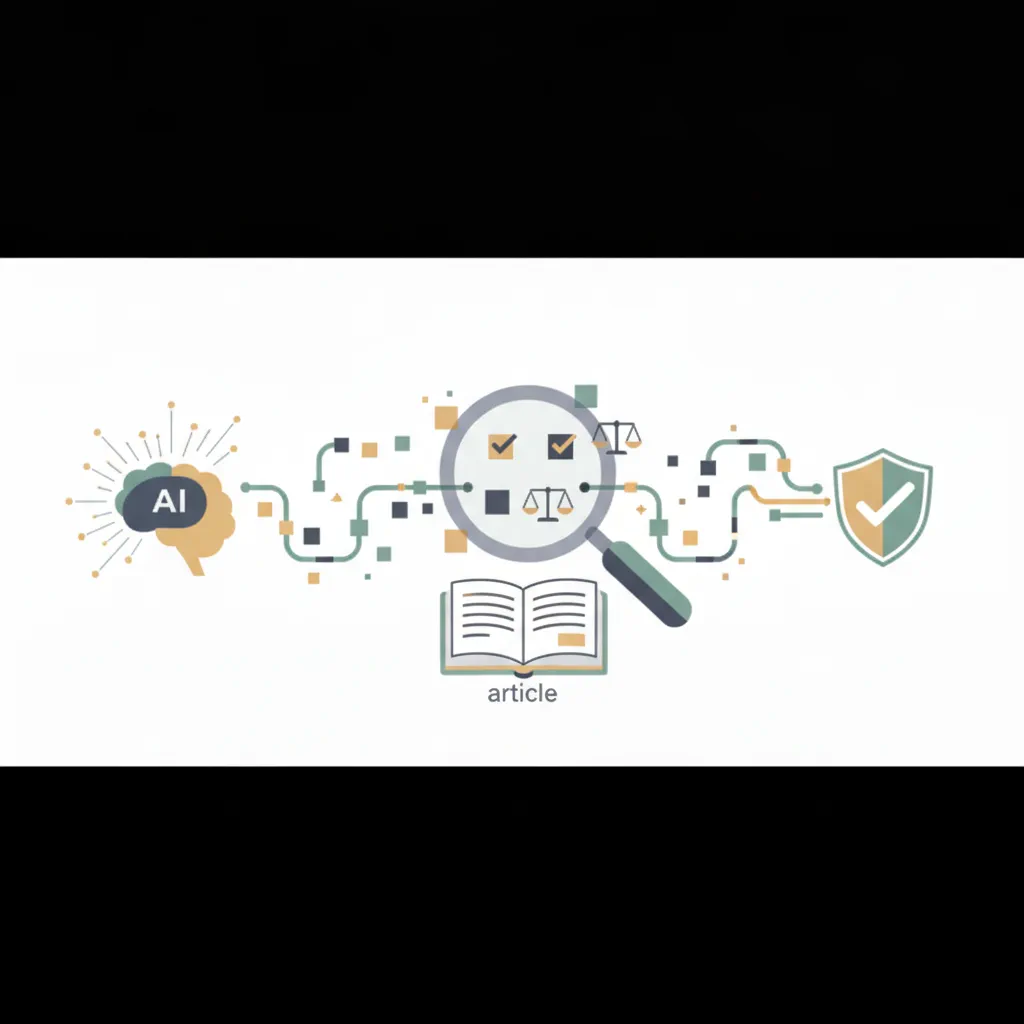
To effectively fact-check AI answers, you must treat every output as a draft hypothesis rather than a verified source, then systematically cross-reference claims against primary documentation, peer-reviewed databases, and official publisher records. Generative models prioritize linguistic coherence over empirical truth, which means they can produce confident-sounding statements that are partially outdated, subtly misattributed, or entirely fabricated. Establishing a disciplined verification routine protects your work from compounding errors while preserving the speed and convenience that make AI valuable. By combining targeted research habits with reliable digital tools, you can confidently separate accurate insights from statistical hallucinations.
Why do AI models struggle with accuracy?
Large language models generate text by predicting the next most probable token based on patterns learned during training. They do not maintain a live database of facts, nor do they run internal truth-validation checks before responding. When you ask a question, the model reconstructs a plausible reply by weighting common phrasings, widely cited references, and structural conventions. This architecture excels at drafting emails, explaining concepts, and scaffolding code, but it cannot independently verify whether a historical date, technical specification, or regulatory update remains current. Training data cutoffs further limit awareness of recent developments, meaning models often default to older information unless connected to a live search API. Recognizing these architectural constraints helps you identify which outputs demand immediate verification and which only require a light editorial pass.
How to verify AI-generated facts step by step
Verification becomes straightforward once you apply a consistent three-step process to every claim. Start by isolating discrete statements within the AI response and categorizing them as objective facts, subjective recommendations, or procedural instructions. Objective statements require hard verification, while subjective advice only needs alignment with your project goals and industry standards. Next, locate primary sources that directly address each claim. Avoid secondary summaries or AI-generated overviews, as they often amplify the original error. Instead, search for official vendor documentation, government publications, academic journals, or verified press releases. Compare the AI’s phrasing against the source material to catch omitted conditions, reversed cause-and-effect relationships, or misattributed figures. Document your findings in a simple spreadsheet so you can track accuracy patterns across different models and prompt styles.
What are the best tools for cross-referencing AI output?
The right digital resources dramatically reduce verification time while increasing confidence in your results. Google Search remains the most efficient starting point for locating official documentation and recent updates. Use advanced operators like site:, filetype:pdf, and exact-match quotation marks to filter out blog aggregators and surface authoritative sources directly. For academic and technical claims, Google Scholar and institutional repositories provide peer-reviewed literature that models frequently reference indirectly. When evaluating public statements or trending topics, dedicated verification platforms like Snopes, Reuters Fact Check, and AP Fact Check offer transparent methodologies and clearly cited sources. For software, coding, and hardware compatibility questions, official developer documentation from Microsoft Learn, Python.org, Apple Developer, and GitHub serves as the definitive reference. Browser profiles dedicated to research can also streamline the process by auto-opening trusted databases and blocking distracting sites. For a deeper look at how to evaluate source credibility, consider cross-referencing official documentation with independent academic databases.
When should I trust AI suggestions over human review?
Not every output requires the same verification intensity, and recognizing this distinction preserves your productivity. Routine tasks like brainstorming content outlines, rephrasing marketing copy, or generating basic code templates often benefit from human editorial review rather than strict fact-checking. In these scenarios, your subject-matter expertise acts as the final quality gate. However, outputs that influence compliance, safety, financial planning, or technical architecture demand rigorous validation. AI models excel at structural reasoning and pattern matching, but they lack contextual accountability and cannot assume liability for errors. If a response includes specific dates, legal citations, dosage recommendations, or hardware compatibility claims, treat it as a starting point rather than a conclusion. Always verify against the official vendor manual, regulatory body website, or certified professional database. Over time, you will develop a clear instinct for which domains require immediate cross-referencing and which only need a light editorial pass.
How to build a personal verification workflow
Sustainable accuracy depends on embedding verification into your daily habits rather than treating it as an afterthought. Start by creating a standardized checklist that matches your most common use cases. Include steps for identifying claim types, selecting appropriate source categories, and recording verification results. Use a digital note-taking app to log sources, access dates, and confidence ratings. This creates an audit trail that proves useful for team collaboration or compliance documentation. Pair your checklist with a dedicated research browser profile that blocks distracting sites and auto-opens your trusted databases. When working with complex topics, run the AI output through a secondary model for comparative analysis, noting where responses diverge. Divergent outputs often highlight areas requiring deeper investigation. If you want to streamline your daily research routine, explore browser extensions that automate citation tracking and tab organization. Consistency matters more than perfection, and a disciplined workflow quickly becomes second nature.
Frequently Asked Questions
How do I know if an AI model is making things up? Look for overly specific details that lack supporting citations, claims that contradict widely accepted sources, or responses that blend multiple unrelated concepts into a single statement. Cross-reference any suspicious claim against primary documentation or reputable news outlets to confirm its validity.
What is the fastest way to verify AI-generated citations? Copy the exact title, author, or DOI mentioned by the model and search it directly in Google Scholar, PubMed, or your institution’s library database. If the source does not appear in the official repository, the citation is likely hallucinated or misattributed.
Should I trust AI for coding or technical documentation? Use AI for scaffolding, syntax reminders, and debugging hints, but always verify function names, version compatibility, and security implications against official developer documentation. Technical ecosystems update frequently, and models may reference deprecated libraries or outdated best practices.
Can automated fact-checking tools replace human review entirely? No, because automated tools rely on predefined databases and cannot evaluate contextual nuance, emerging research, or industry-specific standards. Human review remains essential for assessing relevance, tone, and alignment with your specific project requirements.
Conclusion
Learning to fact-check AI answers is less about memorizing complex research methodologies and more about establishing consistent, repeatable habits. By isolating discrete claims, tracing them back to primary sources, and leveraging established verification platforms, you transform AI from a potential liability into a highly efficient research accelerator. Keep your trusted source bookmarks organized, maintain a simple tracking log, and adjust your verification depth based on the stakes of each task. With a disciplined approach, you can safely integrate generative AI into your workflow while maintaining full editorial control and factual integrity.
Disclosure: this article may contain affiliate links.