The best AI FP&A software in 2026 is not the tool with the flashiest chatbot. It is the platform that helps finance teams model scenarios faster, trust the numbers, explain what changed, and push decisions forward without rebuilding the plan every time the business moves. The useful products here combine forecasting, variance analysis, narrative reporting, workflow coordination, and governed data access instead of treating AI like a thin assistant pasted over spreadsheets.
This category has real 2026 momentum now. Abacum launched Abacum Intelligence as a platform-wide AI layer in April. Pigment keeps pushing specialist Analyst, Modeler, and Planner agents for business planning. Anaplan added CoModeler, Custom Analyst, and Agent Studio in March. Datarails is reframing the category around FinanceOS and finance MCP infrastructure. And Planful just launched Planner Assistant for natural-language forecasting and anomaly detection.
If your finance stack problem is more about cards, reimbursements, and spend controls than planning, start with our guide to the best AI expense management software. If your team still lives in workbook hell, the best AI spreadsheet tools guide is the better adjacent read. And if you are building a broader finance operations stack around close, reporting, and analyst workflows, our roundup of AI tools for accountants is worth pairing with this one. For more buyer-style roundups, the full comparisons archive is the wider hub.
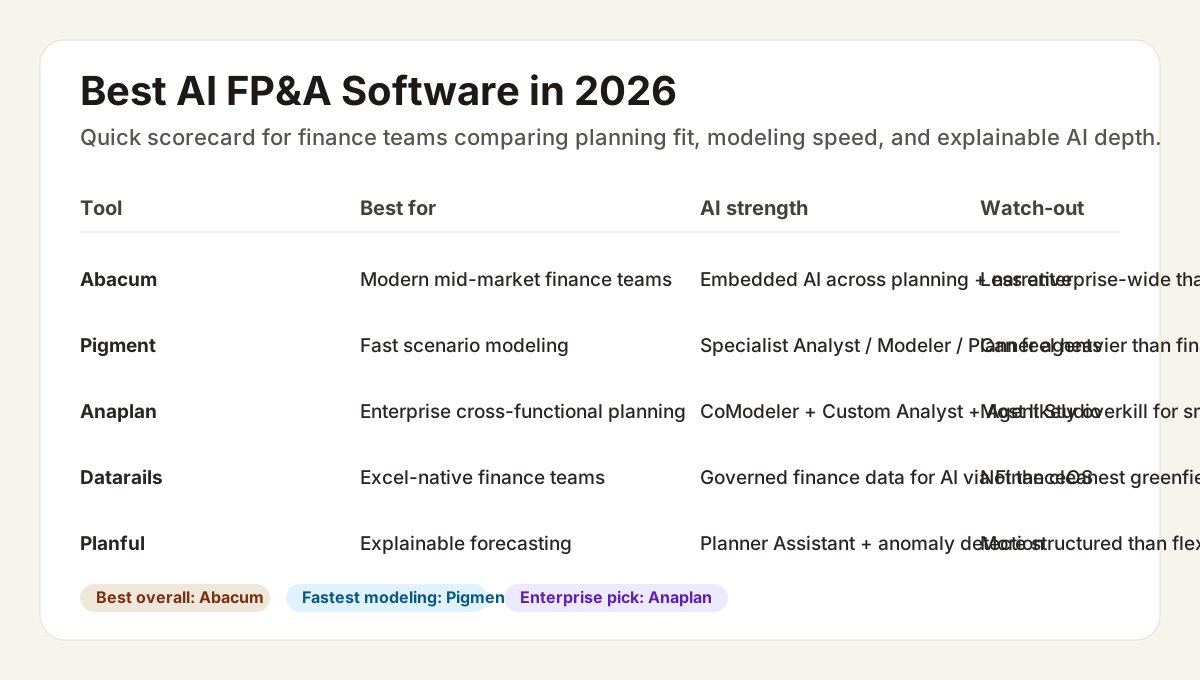
Quick answer: which AI FP&A software should you use?
- Use Abacum if you want the best overall AI FP&A software for a mid-market finance team that needs planning, reporting, modeling, and cross-functional workflow support in one place.
- Use Pigment if you care most about flexible modeling, fast scenario building, and agent-assisted planning across finance and business teams.
- Use Anaplan if you need enterprise-grade planning across finance, sales, supply chain, and workforce functions with stronger governance and scale.
- Use Datarails if your team is deeply Excel-native and wants AI on top of governed finance data without ripping spreadsheets out of the operating model overnight.
- Use Planful if you want explainable forecasting, anomaly detection, and a more guided finance-performance-management experience.
For most teams, Abacum is the best AI FP&A software in 2026 because it feels the most purpose-built for modern finance workflows instead of retrofitted around them. Pigment is the sharpest pick for modeling speed and flexibility. Anaplan still makes the most sense for large enterprise planning estates.
Why AI FP&A software suddenly matters more
FP&A has always had too much manual translation work. Finance collects numbers from different systems, rebuilds assumptions in planning models, turns variance into narrative, answers the same follow-up questions from leaders, and then repeats the cycle next week. AI is finally landing in parts of the workflow that actually matter:
- Model building: turning plain-language planning requests into governed scenarios faster.
- Variance analysis: surfacing what changed, why it changed, and where to investigate next.
- Narrative reporting: turning the model into CFO-ready commentary without writing the same board-pack language from scratch.
- Workflow coordination: collecting inputs, routing approvals, and reducing the back-and-forth that kills forecast cycles.
- Governed AI access: letting teams query finance data without spraying sensitive numbers into unstructured tools.
The current product wave makes this more than hype. Abacum is embedding intelligence across context, modeling, narratives, scenarios, and workflow. Pigment is leaning hard into a network of specialist planning agents. Anaplan is productizing AI agents inside a mature enterprise planning platform. Datarails is betting that finance teams need an auditable operating layer before AI is actually useful. Planful is going after a more explainable assistant model grounded in the customer’s own planning data.
This is also why generic chatbots are not enough. If all you need is formula help, a general assistant plus the best AI data analysis tools or spreadsheet stack may be enough. But if you need shared assumptions, scenario control, workflow ownership, and executive-ready outputs, you need software that owns the planning system itself. That same system-vs-demo difference also shows up in our AI tools for operations teams guide.
| Tool | Best for | What it does best | Link |
|---|---|---|---|
| Abacum | Best overall | Combines planning, reporting, AI narratives, scenario modeling, and workflow coordination in a finance-native platform | → Visit Abacum |
| Pigment | Fast modeling and cross-functional planning | Specialist AI agents help teams analyze metrics, build governed models, and run scenarios quickly | → Visit Pigment |
| Anaplan | Large enterprise planning | Strong governance, scale, and multi-function planning depth with new AI agent tooling on top | → Visit Anaplan |
| Datarails | Excel-native finance teams | Keeps finance in familiar workflows while adding governed AI access, planning, and reporting on unified data | → Visit Datarails |
| Planful | Explainable forecasting and guided finance performance management | Strong anomaly detection, forecasting support, and assistant-led finance insights grounded in your own plan | → Visit Planful |
Abacum — Best overall AI FP&A software for modern finance teams
Website: abacum.ai
Abacum gets the top spot because it has the clearest finance-first product story right now. Its April 2026 Abacum Intelligence launch is not just a side assistant. The company is framing AI as a platform-wide layer across context, modeling, reporting, scenarios, and workflow. That matters because finance teams do not need one cute chat box. They need planning logic, governed business context, and cross-team input collection to work together.
In practice, Abacum looks strongest for mid-market teams that want to move faster without inheriting giant-enterprise implementation drag. It is especially compelling when FP&A is working closely with GTM, product, and leadership teams and needs one place for scenario changes, narratives, and operational inputs. The MCP-style extension into tools like Claude, ChatGPT, and Slack is also a smart signal: the platform wants to bring governed finance context into the tools people already use instead of trapping everything in one UI.
Choose Abacum if: you want the best balance of AI depth, planning usability, and finance-specific workflow support without buying a heavyweight enterprise planning estate.
Pigment — Best for fast modeling and agent-assisted planning
Website: pigment.com
Pigment stands out when the biggest buyer pain is modeling speed. Its Analyst, Modeler, and Planner agents are a strong fit for teams that want to move from “we should test that scenario” to “here is the scenario and its impact” much faster. Pigment’s positioning is less about producing a generic finance copilot and more about coordinating specialist agents around planning work.
That shows up in the product story: the Analyst Agent scans metrics and flags trends, the Modeler Agent builds or evolves governed models from natural language, and the Planner Agent helps orchestrate planning cycles across teams. If your company’s planning complexity is driven by fast-changing assumptions, department-level collaboration, or constant what-if work, Pigment is one of the sharpest options in this market.
Choose Pigment if: flexible scenario modeling and cross-functional planning speed matter more than staying tightly anchored to spreadsheet-first workflows.
Anaplan — Best for enterprise-wide planning and governance
Website: anaplan.com
Anaplan is still the obvious candidate when finance planning is inseparable from broader enterprise planning. Its March 2026 release added CoModeler, Custom Analyst, and Agent Studio on top of a platform that already spans finance, sales, supply chain, and workforce planning. That combination matters for buyers who are not choosing an FP&A point tool. They are choosing a planning operating system.
The tradeoff is familiar: Anaplan tends to make the most sense when governance, scale, and cross-functional modeling are core requirements, not nice-to-haves. Smaller teams can find it heavier than they need. But for organizations with multiple planning domains, more formal model ownership, and a need to standardize decision-making across functions, Anaplan’s AI layer lands on top of a platform that already knows how to handle enterprise complexity.
Choose Anaplan if: finance needs to plan in lockstep with the rest of the business and you care more about governance and scale than lowest-friction setup.
Datarails — Best for Excel-native teams that still want governed AI
Website: datarails.com
Datarails takes a different angle than the others here. Instead of asking finance to abandon spreadsheet reality, it is trying to make that reality safer and more AI-ready. Its 2026 FinanceOS push argues that the real blocker for finance AI is not model capability; it is governed infrastructure. That is a serious point, and for a lot of finance teams it is probably correct.
If your team is still deeply Excel-based but you need consolidated data, auditability, AI-assisted analysis, and more usable reporting, Datarails is easy to like. The product story around finance MCP, unified data, and traceable AI execution is stronger than a generic “AI for CFOs” pitch because it addresses the governance problem directly. It is not the best fit if you want the cleanest modern planning UX from day one, but it is one of the best fits if change management is the real constraint.
Choose Datarails if: your finance org wants AI leverage without ripping out the spreadsheet-centered operating model overnight.
Planful — Best for explainable forecasting and guided finance insights
Website: planful.com
Planful earns the fifth spot because its recent Planner Assistant launch is aimed at a buyer need that is very real: finance leaders want forecasting help, anomaly detection, and planning insight in natural language, but they do not want black-box answers detached from their own models. Planful is explicitly grounding Planner Assistant in the customer’s planning data and its own Predict engine, which is the right direction for trust-sensitive finance work.
That makes Planful a good fit for teams that want a more guided finance-performance-management experience rather than the most open-ended modeling system. The tradeoff is that it feels more structured and opinionated than Pigment, and less platform-reframing than Abacum or Datarails. But for finance teams that value explainability, forward-looking signals, and a cleaner assistant-led workflow, that structure can be a plus.
Choose Planful if: you want natural-language forecasting help and explainable AI insight without turning the planning process into a DIY agent project.
How to choose the right AI FP&A software
Use this short filter before you buy anything:
- Start with operating model, not features. If finance is fundamentally spreadsheet-native, Datarails is more realistic than pretending everyone will become model-builders overnight.
- Check where governance lives. AI summaries are easy. Governed assumptions, permissions, auditability, and scenario ownership are the hard part.
- Figure out whether you need finance-only planning or business-wide planning. Abacum and Planful feel more finance-centered. Pigment and Anaplan stretch further across teams and functions.
- Pressure-test narrative quality. Ask how the tool turns numbers into commentary, not just charts. Board and exec reporting is where the real time savings show up.
- Watch the integration path. If the product cannot reliably connect your ERP, CRM, HRIS, and operational data, the AI layer will disappoint fast.
If your team is earlier in the maturity curve, it can also be smarter to fix reporting, close, and spreadsheet hygiene first, then buy planning AI second. The wrong sequence creates expensive shelfware.
Bottom line
Abacum is the best AI FP&A software in 2026 for most modern finance teams because it is closest to what buyers actually want now: finance-native planning, reporting, workflow, and AI intelligence inside one usable system. Pigment is the best choice when modeling speed and scenario flexibility dominate the decision. Anaplan remains the right answer for bigger enterprise planning estates. Datarails is the strongest bridge for Excel-native teams, and Planful is a solid fit for explainable forecasting and guided finance insights.
The common thread is simple: do not buy based on the AI demo alone. Buy based on whether the platform can own the financial context, workflow, and governance that make the AI useful in the first place.