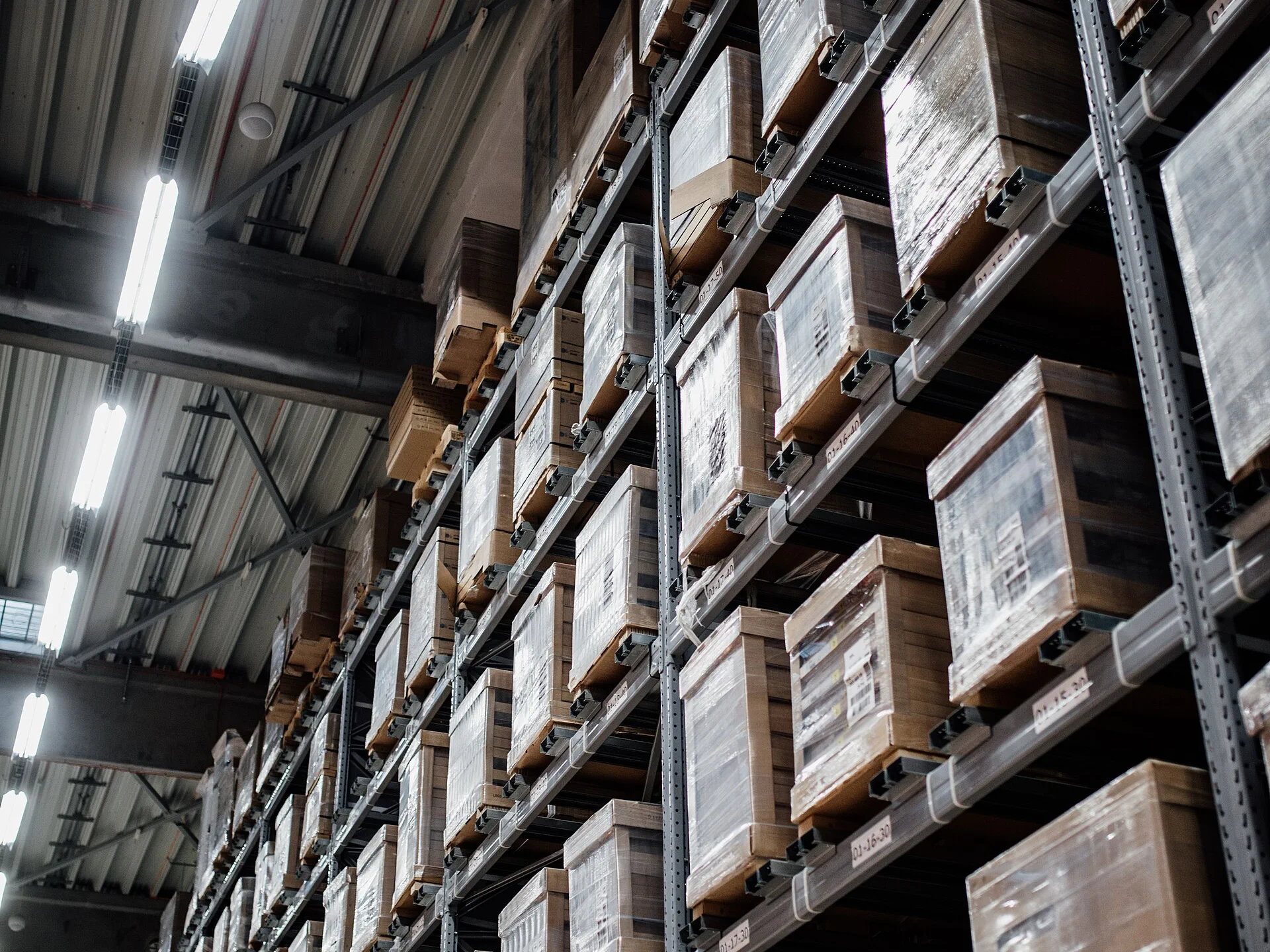
Photo by Shixart1985, CC BY 2.0, via Wikimedia Commons
Selecting the right AI inventory management software allows organizations to automate stock replenishment, predict demand fluctuations, and minimize carrying costs through data-driven decision-making. Modern platforms leverage machine learning to analyze historical sales, seasonality, and supply chain variables, reducing the reliance on manual spreadsheets and reactive ordering processes. By integrating predictive analytics directly into daily workflows, businesses can maintain optimal stock levels, improve order fulfillment rates, and free planners from repetitive administrative tasks.
How does AI differ from traditional reorder point methods?
Traditional inventory planning often relies on static safety stock and fixed reorder points calculated from average demand and lead times. These methods assume consistent consumption patterns and struggle to adapt to volatility, promotions, or supply disruptions. AI-driven approaches analyze dynamic variables including seasonality, lead time variability, and correlated demand across product categories. Machine learning models continuously update predictions as new data flows in, allowing the system to adjust recommendations in real-time rather than waiting for stock to hit a threshold.
AI tools can also detect complex patterns that humans might miss, such as the impact of external factors like weather events, competitor pricing, or social media trends on specific items. Some platforms incorporate demand sensing capabilities that analyze recent sales velocity to refine short-term forecasts, providing a more accurate view of immediate needs than long-term statistical averages alone.
What platforms lead the market for AI inventory control?
Zoho Inventory with Zia AI
Zoho Inventory includes Zia, the platform's AI assistant, which analyzes sales trends and inventory levels to provide actionable recommendations. Zia can predict future sales volumes based on historical data and flag items that are at risk of stockouts or overstocking. This tool is particularly useful for small to mid-sized businesses looking for an accessible entry point into AI-driven stock control without complex configuration. Zoho Inventory also supports multi-channel synchronization, ensuring that AI models have access to comprehensive sales data across different storefronts. The platform offers automated reordering triggers and stock level alerts that leverage Zia's insights to streamline procurement.
Cin7 Core and Cin7 AI
Cin7 Core serves businesses with complex distribution needs, offering Cin7 AI for advanced demand forecasting. The platform processes data from multiple warehouses and sales channels to generate forecasts that account for promotional activity and market trends. Cin7's approach emphasizes integration with existing e-commerce and retail systems, allowing the AI engine to refine predictions as new transaction data flows in. Users can leverage these insights to optimize safety stock levels and improve order fulfillment accuracy across wholesale and retail operations. Cin7 also provides tools for batch and serial number tracking, which feed into the analytics for granular visibility.
QuickBooks Commerce (formerly TradeGecko)
QuickBooks Commerce focuses on streamlining operations for growing businesses through Smart Reordering and multi-channel inventory visibility. The platform automates purchase order creation based on predefined rules and demand signals, reducing the administrative burden of manual replenishment. While the AI capabilities are often embedded in the reorder logic, the system excels at maintaining real-time stock accuracy across marketplaces and physical stores. QuickBooks Commerce integrates with accounting and shipping partners to close the loop between inventory movement and financial reporting. This solution is well-suited for merchants managing high SKU counts across numerous sales channels who need centralized control.
Oracle NetSuite with SuiteAI
Oracle NetSuite provides a comprehensive ERP solution where SuiteAI enhances inventory planning and supply chain management. The platform uses predictive analytics to recommend optimal inventory levels and identify potential supply disruptions before they impact operations. NetSuite's AI features support generative AI capabilities for summarizing reports and assisting with planning scenarios, helping managers interpret complex data quickly. This solution is suited for mid-market and enterprise organizations that require a unified system for finance, CRM, and inventory management. NetSuite also offers robust manufacturing capabilities, allowing AI to optimize raw material procurement alongside finished goods stock.
Kinaxis RapidResponse
Kinaxis RapidResponse targets enterprise supply chains with RapidResponse, a platform that combines AI and simulation for end-to-end planning. The system enables teams to model different supply chain scenarios and evaluate the impact of demand changes or supplier delays on inventory positions. Kinaxis leverages machine learning to improve demand sensing accuracy by incorporating external signals alongside internal transaction history. This tool is designed for organizations that need real-time collaboration and advanced analytics to manage global inventory networks. The platform supports what-if analysis, allowing planners to test strategies before implementing changes.
What criteria determine the best AI inventory solution for your business?
Evaluation should focus on data integration, forecasting methodology, and scalability.
- Integration breadth: The AI model is only as good as the data it receives. Verify that the software connects natively to your e-commerce channels, ERP, and warehouse management systems to ensure data flows without manual intervention.
- Forecasting transparency: Look for tools that explain the factors influencing predictions, allowing planners to adjust for known events like marketing campaigns or supply constraints. Black-box models can be difficult to trust and troubleshoot.
- Automation controls: Ensure the system supports human-in-the-loop workflows where AI recommendations require approval for high-value items before execution. Full automation may be risky for critical components without oversight.
- Scalability: Confirm the platform can handle increases in SKU count and transaction volume as the business grows. Check whether pricing or performance degrades as data complexity rises.
- Cost structure: Pricing models vary widely, ranging from per-transaction fees to tiered subscriptions based on SKU count or user seats. Some enterprise solutions require custom quoting based on implementation scope.
How to prepare your organization for AI inventory adoption?
Successful implementation requires clean data and clear processes. Effective implementation requires attention to data governance best practices to prevent model drift.
- Audit historical data: AI models struggle with gaps or errors in past sales records. Clean up product catalogs, remove discontinued SKUs, and correct lead time data before migration.
- Define key performance indicators: Establish metrics such as inventory turnover, fill rate, and stockout frequency to measure improvement. These benchmarks help quantify the value of AI recommendations over time.
- Start with a pilot program: Focus on a specific category or warehouse to validate AI recommendations against actual performance. This approach reduces risk and builds confidence among staff before full deployment.
- Train staff on interpretation: Planners need to understand how to read AI insights and override predictions when external knowledge warrants intervention. Training should cover both the tool's capabilities and its limitations.
- Review workflows regularly: Teams often overlook workflow automation strategies during the migration phase, leading to process friction. Continuously refine approval chains and alert thresholds based on user feedback.
What challenges arise when implementing AI for stock management?
Organizations often face resistance from teams accustomed to manual planning. Change management is critical; planners may distrust AI suggestions initially, necessitating a period of shadow mode where predictions are compared to manual decisions without overriding existing processes.
Data silos represent another common obstacle. Inventory data trapped in disparate systems prevents AI from building a holistic view of supply and demand. Breaking down these silos often requires IT investment and cross-departmental coordination. Volatility can also impact performance; sudden market shifts may outpace model adaptation, requiring frequent recalibration of algorithms to maintain accuracy.
Additionally, vendor lock-in risks exist with proprietary data formats. Evaluate the ease of data export and migration. Relying on proprietary formats can make it difficult to switch providers if requirements change. Finally, over-automation can be detrimental. Relying entirely on AI without human oversight for strategic decisions may lead to errors during unprecedented events where historical data provides no guidance.
Conclusion
Choosing the best AI inventory management software depends on your organization's size, complexity, and existing technology stack. Platforms like Zoho Inventory and QuickBooks Commerce offer accessible AI features for growing businesses, while Cin7 Core, Oracle NetSuite, and Kinaxis provide advanced capabilities for complex supply chains. By prioritizing data quality, integration, and human oversight, organizations can leverage AI to improve accuracy, reduce costs, and respond faster to market changes. As AI technologies continue to evolve, early adopters who establish strong data foundations and adaptable workflows will be best positioned to benefit from the next generation of inventory intelligence.
Frequently Asked Questions
Can AI inventory software replace manual counting?
AI software can reduce the need for manual counts by tracking real-time movements and suggesting cycle counts, but physical verification is still required periodically to correct discrepancies caused by theft, damage, or receiving errors.
Does AI inventory management work for small businesses?
Yes, several cloud-based platforms offer AI features accessible to small businesses, helping automate reordering and forecasting without the complexity or cost of enterprise systems.
How accurate are AI demand forecasts?
Accuracy depends heavily on data quality and volatility; while AI can significantly improve over manual methods, sudden market shifts or supply disruptions may still impact precision.
What integrations are essential for AI inventory tools?
Look for native integrations with your e-commerce channels, ERP system, and shipping carriers to ensure the AI model receives complete data for accurate predictions and automated workflows.
How do I handle AI recommendations that seem incorrect?
Most platforms allow you to provide feedback on recommendations, which helps the model learn over time. You should also maintain override controls to apply human judgment when external factors are not reflected in the data.